Tuesday, November 29, 2011

A Shout-Out to Denver TV News Broadcasters

I need to give a big thank you to the local Denver Newscasters. I wrote an email to one of the stations we watched to let them know that a graphic they used triggered pain in me because of my migraines. It was used during the weather report, and that was the part of the news I really needed to watch! Since then, I've noticed that all of the local news stations have removed flashing graphics from their entire newscast. Thank you, Denver. I moved hear for my health and found a home here. You have truly welcomed me in a way that brings tears to my eyes, and restores my faith in humanity.

Sincerely,
Pamela Curtis

Monday, November 28, 2011

Procrastination & Forgiveness

I have a Midwest work ethic. I've never liked taking more than two weeks off from work. It makes me anxious. I should be doing something. Something constructive. Something to take care of business. But that's really difficult to do when our bodies don't cooperate. And it's hard to override those feelings. For me, I struggle daily with feelings of guilt over what I'm not doing but should be doing. To my heart, it doesn't matter that that my body is kaput. I still want to do these things. The wanting hurts. So I've had to learn to slow down.

As Jenny Pettit puts it,
"With chronic illnesses (and pain and fatigue) comes plenty of chronic guilt. We may voice the legitimacy of our limits for the rest of the world...but inside our own heads we hear so much doubt. Do I really need a 4 hour nap? Can't I stay up late and get this task done? Why should I get to claim "brain fog" when other people wouldn't need to stop? (And yes, "brain fog" sounds pretty silly to us, too, even though we live the debilitating effects.)

"Yes, we do. Yes, we need to nap - our bodies are fighting 24-7 battles against themselves. No, we can't stay up late - what little functionality we have is strongly correlated to our ability to adhere to a schedule. We 'get to claim brain fog' - our work is no good when it comes from a low-hanging cloud. We need to forgive ourselves.

"We need to BELIEVE it's ok to live within these limits. We need to allow ourselves compromises with ourselves. We need to accept we aren't going to be able to build the tower of Babel on a 4 day weekend just because "it has to get done somehow", and love ourselves anyway. We need to ask ourselves for forgiveness and give it wholeheartedly and without delay."
(Forgiving Myself - UII - Understanding Invisible Illnesses)

It's not that I won't reach success. It's just that it's going to take me a lot longer to get there. Yes, the laundry will be hung up eventually. Yes, I will be able to finish that blog post. Yes, that task is impossible for me right now. But it may be possible later. I can do things in small, manageable steps. I don't need to complete everything at once. I can accept my limits. I believe I've used this analogy before, but it bears repeating. I like to think of it like driving on the highway. There's a big difference between acceptance and approval. I may not approve or like that the car in front of me has come to a sudden stop, but I accept the fact that it has happened, and slam on my breaks so I don't cause an accident.

There are all sorts of things that can happen to put walls in my way. I need not beat myself up about it in the meantime. In fact, science shows that the act of forgiving ourselves for doing poorly can actually help use do better the next time, as it helps us change our behavior for the better. Beating ourselves up about it makes for poorer performance, as does using forgiveness as a "free pass" to continue the bad behavior. If we're focused on success as our goal, it's better to forgive than punish. This was shown in a recent study of college students and their reaction to procrastinating studying for an exam. If the student did poorly the first time, forgiveness was the key to improve performance.

"Forgiveness allows the individual to move past their maladaptive behavior and focus on the upcoming examination without the burden of past acts to hinder studying. By realizing that procrastination was a transgression against the self and letting go of negative affect associated with the transgression via self-forgiveness, the student is able to constructively approach studying for the next exam."
Timothy A. Pychyl from Psychology Today's Don't Delay

Also, just because there's a wall there now doesn't mean there will always be a wall there. I may have an inspiration and discover a door through the wall, instead of banging my head against it. I may find a way around the wall. The wall may come crumbling down. Sometimes, however, we find a way over, where we're able to use the walls like springboards to success. One of the most inspiring stories I have heard lately is that of Amy Purdy, a woman who lost her legs below the knee and now is a professional snowboarder.


Now, while I may not end up a professional snowboarder (that's not really my thing) I can, and have, used my disability to further my work as a writer. My audience has changed and the pay is lousy (e.g., non-existent...). But I'm still contributing to society in a positive and constructive way. That's why I made this blog. Helping others with problems similar to mine helps me help myself. So it's okay it I have to do it in bits and pieces. I can forgive myself my procrastination and do more when I'm feeling better. The point is I'm eventually able to get it done and delivered. I may not be at the rate it was when I was well, but I still do it. I can accept my shortcomings, manage them best as possible, and forgive myself the rest.

"Perfection is the enemy of good enough." -Russian Proverb

Sunday, November 27, 2011

Opportunities of chronic nausea

One of the effects of small fiber neuropathy is a condition called gastroparesis. That's a fancy name for "your stomach is on strike." What happens is a disruption of nerve signals to the stomach, and the stomach doesn't know to do its job. The result is constant nausea, premature fullness during meals, weight loss without trying (not entirely a negative), and vomiting (rare for me, thankfully). And now, as I have discovered on my very own... dehydration. Turns out the rheumy was right, even though his test was unfair. My kidneys are angry at me right now and I'm on extra medication for the pain. Not good. I should take better care. And I will. Herein is my plan of action.

I am going to be on anti-nausea medication on a regular basis. It's not enough to try and tough it out anymore. Forcing myself to suffer is not bringing positive results. It might be lauded in literature, but in my reality it's not the way to go. I don't like adding another pill to the mix at all, but it can't be helped. The consequences of not taking it are not acceptable. I am responsible for this. Therefore, I can change this and make it better.

I am going to carry a bottle of water with me at all times. I'm going to make a game of it like drinking games for cheesy movies, only for me it will be water. I will place bottles of water around the house and every time I enter a new room, I will take a drink. Every time I go to take a break from whatever I'm doing, I take a drink. At every meal I will drink an entire glass of water. It will grow into a pleasant ritual that will ensure my kidneys' health.

It may be a little silly or strange, but when it comes to my health, that doesn't matter. Avoiding dialysis is far more important than avoiding blows to my pride. Instead, I can use my embarrassment as an opportunity to enhance my humility and remember that for all my talents, I am human and a delicate flower. I need to be cautions, not cocky. Pride goeth before the fall, and when I fall, I hit the ground hard. It's better for me to blush and own it.

Also, it's an opportunity to build self-esteem. Following the rules of my game will make me feel like a good girl. It may be a simple act---taking a sip of water---but for me, it's obviously more difficult. So it doesn't matter that the act is small. The act is important. And since it's easily accomplished, that's a little boost to my esteem each time. My new routine is a joyous opportunity for growth rather than a new oppressive obligation. Taking care of myself becomes rewarding and fun, and as a result, easier to do and easier to stick to. #winning ;^)

I had originally tilted this post "Consequences of chronic nausea." But it quickly became obvious to me, as I put my thoughts on the screen, that I wasn't talking about consequences. Oh sure, technically there are consequences, but my attitude towards them makes all the difference. My life may be more difficult to manage than most people, but these "consequences" have made me clever, enduring, patient, and wise. I may have times when I think the cost was pretty steep, but I cannot deny that there have been great benefits and opportunities from getting sick.

Strange how the world works, neh?

Saturday, November 19, 2011

Dependence versus addiction

"Oh, I had so much trouble stopping that medication. I was ADDICTED to it!" How many times have you heard this? It's bull$#!+. What they're describing is DEPENDENCE, which is a very different animal. I will suffer withdrawal symptoms if I stop eating. Does that mean I'm addicted to food? No. Absolutely not. There are blood pressure medications that can't be stopped suddenly because of withdrawal symptoms. That's not addiction. And yet, there is this idea out there that just because someone has trouble coming off of a medication that's a sign of addiction. That's propaganda and a dangerous lie.

A similar dangerous misconception is the idea that increased tolerance is a sign of addiction. That's malarkey too. Bacteria become drug resistant. People with seizures will become drug tolerant and need more of their medication. Many people with depression and anxiety will become tolerant to their SSRIs and have to increase dosage or switch medications or add other medications into the mix. But we don't say that those people have become addicted to their antidepressant. Epileptics aren't addicted to their anti-seizure meds. We don't say that the bacteria is addicted to antibiotics. That's just silly.

Addiction has a key feature that separates it from dependence. That is, there are negative consequences from taking the substance, but the addict will take the substance anyway. That's like my German Shepard who can't figure out not to stick his nose in the yellow jacket nest because he'll get stung. Another example would be someone who keeps sticking their hand on a hot stove even though they get burned. It's the addict who says, "I always end up in jail when I drink. Next round is on me!" It's insanity.

The problem with painting dependence as addiction is that it makes the problem seem a whole lot bigger than what it actually is. This is great for getting people to rally to your cause, but it's a bit like going to war because the enemy "might" have weapons of mass destruction. Oh, wait. We did that, didn't we?

And that's the point of propaganda: get everyone worked up about the tiger that might be lurking in the bushes to justify the action you want to take anyway. Was Saddam Hussein committing genocide against his own people? Absolutely. He was a horrible dictator. Is addiction a problem that ruins lives? Absolutely. And it can hurt the lives of people not even taking the substance. But the truth is it is not as bad as the media and the talking heads of government would have us believe.

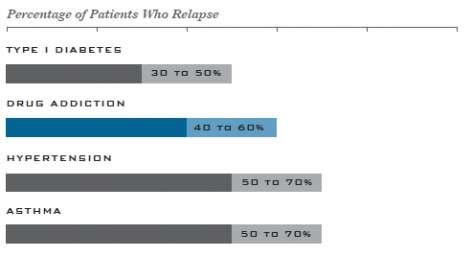
The truth is that half of all addicts outgrow their addiction naturally according to the DEA. The truth is addiction is a disease that can be managed like hypertension or asthma.


The truth is "the global prohibition of drugs has manifestly failed to stem the use of narcotics, [and] it has generated enormous costs and perverse outcomes. In the United States, the war on drugs is generating alarming violations of civil liberties, weakening the rule of law, and compromising law enforcement efforts. The U.S.-led drug war is also undermining legitimate foreign policy goals around the world, including the spread of liberal democracy and an effective war on terror." (CATO Institute, Ending the Global War on Drugs)

Don't believe the hype.

Thursday, November 17, 2011

Lies I choose to believe


My friend Jim once told me, "There are lies that I choose to believe, even though I know they're not true, because it makes me a better person when I believe them." I can totally understand that. Yesterday, I had a BIG wall of denial come crashing down. I've been telling myself that my feet are just cold and that I don't want to wear socks because that will make my feet hurt. But yesterday I had to have neurological testing. I was being stuck with a sharp pin and I couldn't feel it. My feet aren't just cold. They're numb. My nerves are dying. The technical term I was given is small fiber neuropathy. And it's slowly, progressively getting worse. There's nothing we can do about it and only a little more we can do to manage the symptoms. This is an obstacle we can't overcome. What makes me a better person is to forget about it.

I act responsibly by knowing my limits and carrying emergency supplies. But after that, I don't let it come into my brain. If I think about the pain that is going to make me stop working on a painting, I won't start painting in the first place. If I worry about the inevitable pain I'm going to get when I'm out walking around, I won't leave the house. At all. It's got to be something big enough and important enough to make me go. And I'll be honest, there have been times when it was only because the current situation I was in was so unbearable that I was able to change anything. I *hate* going to the ER. But I know from experience once my pain hits a certain point, there's nothing at home I can do to stop it, and there's a reasonable chance it could trigger devastating pain that will last for years. It's happened before. But I can't think about that all the time or I wouldn't do anything.

I'm never going to get better. And I'm going to slowly lose my abilities and senses as time goes on, except when the pain decides to flare. Then I'll be feeling all too much. So what? I wasn't going to be young forever either. Everyone's skills decline over time. Mine just sooner than most. But not as bad as some others, either, so there's that.

It does me no good to remember on a daily basis that I'm losing ground. I'm never going to not lose ground. It's all downhill from here, and there's nothing anyone can do about it. So what else is on the menu? We're all going to die too, but we don't going around wailing about it. Right now I can still walk and type, drive well enough to see and hear well enough to not require hearing aids. I'll work with what I've got for as long as I can and deal with the rest of it when it gets here. Worrying about it now does me no good.

Still, yesterday was filled with tears as the reality of just how much nerve sensation I've lost became apparent. I didn't know it was that bad. But it shows how successful I've been despite the loss if I haven't been able to notice the deterioration. The lie that everything was okay allowed me to function even though everything was not okay. I'm okay with that lie.

Sunday, November 13, 2011

Building self-esteem in pain

Fifty-eight percent of chronic pain patients I surveyed say that they have not gotten used to their pain. The other 42% responded with, "depending on the pain, you can get used to it." But what does that mean, exactly? For most people it's not that they can get to a point where they can ignore the pain. That was actually a rare occurrence for folks. What was more common was the learned ability to do activities in spite of the pain. If pain is forgotten, it's only momentary, and far too fleeting. And there are always still days that overwhelm. Most all respondents expressed some self-censorship. Other people, healthy people, don't want to hear about our pain. We learn the hard way that when we're asked how we're doing, we should have a polite answer ready and not use the real answer.

So that I'm not actually lying, I'll respond, "Hanging in there." It sounds positive enough, and it's true. That's one of the things most isolating about something that only we are suffering. I lived through the great Midwest flood of 1993. There were parts of St. Louis that became islands, as bridges and roadways were under water. Everyone knew the need to share about this trouble or that catastrophe because it was too much to keep it bottled inside. Everyone knew someone affected and could commiserate in the loss. Everyone had a sense of despair. When we mourned, we mourned together. The shared sadness was a bonding experience. We were a community, crying in one anguished voice.

Chronic illness is its own private hell. If you look good, healthy people can't understand what all the fuss is about. If you don't look good, people will treat you as though you have contagious, even when you don't. It's primal: we're hardwired to avoid sickness and seek health. People may not even know they're reacting that way, but it's in body language and tone of voice. Healthy people become stand-offish. Worse still, some of us experience bullying and name-calling during physically low times. It's sometimes really difficult for other people to understand our limitations. We're not saying, "I can't..." for attention. We're saying, "I can't..." because there are nasty consequences on the other side if we even try.

What I've learned to do is bow out gracefully. I thank whomever for the invitation, and give some polite reason like, "I think I should rest up a bit tonight." I only ever mention I'm in pain if there's something that I want done about it right now. Oh, to be sure, I have the occasional whine and moan, but it's brief. I've learned over the years that I can't afford to be self-pitying. It becomes too easy for me to make excuses as to why I shouldn't be responsible and keep my room clean or do the dishes in a timely manner. Yes, it almost always feels better to rest. But nothing gets done that way. When I adopt a "get 'er done" attitude, I may pay for it in increased pain and decreased energy, but I feel better in my soul.

I always feel better about myself when I treat myself with respect, when I act responsibly, and when I take care of my business. I heard a motivational speaker phrase it as, "to build self-esteem, do esteemable acts." I would add the caveat, "when no one is watching." It's one thing to do the right thing when there's an audience to cheer your heroism. It's quite another thing to be good for the sake of goodness. Yes, making my bed every morning is a pain in the butt, but the whole room looks nicer and I feel better about myself and my environment when I make the extra effort. Vacuuming my bedroom may take an entire afternoon and evening's worth of energy, but it's those constant little reminders of "I'm doing the right thing" that allows me hold my chin up.

I once had a vision when I was in a level 10 migraine. The pain was excruciating, and I was soaking my neck in hot water to try and get my shoulders to unknot while holding an ice pack on my head to keep the pounding at bay. My vision went white, and I saw myself, as an adult, walking hand-in-hand with me as a child. I told myself, "You do understand that this child is within you, right?" I was a strong believer of the inner-child methods in psychology. Working with them had helped me a great deal through the years. In the vision, I nodded yes to myself. My other-self got really stern and demanded, "then how the hell can you tell this child that it's okay to be in that level of pain?" It was then that I finally stopped toughing it out and I took the pain pills.

It's the same way with being responsible towards myself. When I don't clean my living space, when I don't take care of my appearance, when I don't behave as a responsible adult, I'm telling my inner child that's the best she deserves. When I break a promise to myself as adult (because sometimes it happens) I make sure to stop and explain to myself why I made the decision to do that. I know I'll feel sad for not keeping my word, but sometimes it can't be helped. I tell myself, "Go ahead and feel bad... take the hit. We screwed up. But it happens. Dust yourself off and do better next time." I do that so that my inner child understands not to take it personally. We're not doing bad because we are bad. Sometimes bad stuff happens to good people. The point is to keep trying. That's something to be proud of.

As my dad likes to remind me, "It's not the mistakes we make that matter... It's how we recover from them that counts." Yes, I'm in chronic pain. Yes, of course it impacts my mobility, my activities, and how I live my life. No, I don't talk about it as much as I would like. I remember a time before my disease and the powerful woman I was. That still hurts to be reminded of when I can't do something. But today I'm learning how to be powerful in more subtle, and I believe, more substantial ways. Where I've lost the ability to be exuberant, I've gained a lot of wisdom to take it's place. I can hold myself in esteem despite the pain.

Friday, November 11, 2011

Testing limits

I was a precocious kid, and into everything. Attempt to hide something up and far away, and I would just find a way to climb and scurry to where it was found. Leave me alone in a room and you just may come back to find I'd taken apart the furniture out of curiosity. I've always been very good at testing limits. Every once in a while, I still like to test the boundaries of my disease. This morning, it heartily reminded me: it's still here.

I'm usually very good about keeping a schedule for my pills and sleep. I would do the same for food, except my chronic nausea is too unpredictable for meal times. I wasn't always this good. I learned the hard way. When I stick to a schedule, I just feel better. I'm more functional and I can get more things done. My mood is better when I wake up in the morning and go to bed at a decent hour. Does this mean I can always do this? No. There's always the occasional migraine that throws the whole system out of whack, and then it's a few days or a week before I can get my health back in the groove again. I try to avoid scheduling things in the morning, because it's always a coin toss how I'm going to wake up. I always make sure to get a full nights sleep before I have to go meet anyone for anything.

Last night, I pushed it. Not only did I stay up late, but I woke up early, and I used an alarm clock. I gave up alarm clocks a long time ago. The sudden jarring from sleep sends my adrenaline rushing into my system, which makes me really, really ill. Imagine the symptoms of a stomach flu for a few hours every morning. That's what alarm clocks to do me. Nausea isn't the best thing to have when you're trying to keep pills in the belly. I canceled this morning's meeting and crawled back into bed.

Yeah, I really screwed up this morning. But I'm putting it in the #winning column anyway. There are reasons why I live the life the way I do, and those reasons are good ones. I can relax now and know that I'm doing well enough. Forcing myself to work harder isn't going to make this situation better yet. I'm still fragile. That's okay... I can work within those limits and still be wonderful.

Testing limits as a kid may have annoyed the hell out of my parents, but it sure is a useful skill to have when battling a disease!

Thursday, November 3, 2011

End the War on Patients

"If I take this addictive substance, it will turn me into an addict!" This is a myth I hear all the time from friends, from family, from the TV, and from well-meaning but uninformed health professionals. Despite all they hype and propaganda, both the FDA and the National Institute of Health state that: "Studies have shown that properly managed medical use of opioid analgesic compounds (taken exactly as prescribed) is safe, can manage pain effectively, and rarely causes addiction." (A Guide to Safe Use of Pain Medications, FDA) But for some reason we're all being taught that if you take a nice, church-going housewife and give her oxycontin, she'll turn into a back-alley dealing junkie with a spike in her arm. But this simply isn't true.

An estimated 12.8 million Americans, about 6 percent of the household population aged twelve and older, use illegal drugs on a current basis (within the past thirty days). This number of "past-month" drug users has declined by almost 50 percent from the 1979 high of twenty-five million -- a decrease that represents an extraordinary change in behavior. Despite the dramatic drop, more than a third of all Americans twelve and older have tried an illicit drug. Ninety percent of those who have used illegal drugs used marijuana or hashish. Approximately a third used cocaine or took a prescription type drug for nonmedical reasons. About a fifth used LSD. Fortunately, nearly sixty million Americans who used illicit drugs during youth, as adults reject these substances.
(Substance Abuse and Mental Health Services Administration, Preliminary Estimates from the 1995 National Household Survey on Drug Abuse (Rockville, Md.: U.S. Department of Health and Human Services, 1996), emphasis mine).

In the year 2000, drug abuse cost American society an estimated $160 billion. ...Health care costs for drug abuse alone were about $15 billion.
(US Drug Enforcement Agency)

Now compare this to the epidemic of chronic pain in this country.

Serious, chronic pain affects at least 116 million Americans each year, many of whom are inadequately treated by the health-care system, according to a new report by the Institute of Medicine (IOM). The report offers a blueprint for addressing what it calls a "public health crisis" of pain.

The reasons for long-lasting pain are many, from cancer and multiple sclerosis to back pain and arthritis, and the chronic suffering costs the country $560 to $635 billion each year in medical bills, lost productivity and missed work." (Report: Chronic, Undertreated Pain Affects 116 Million Americans, Maia Szalavitz, June 29, 2011)

Right now, we are punishing the many for the actions of a few. There are 116 million people undermedicated for pain because of our war on drugs, to try and fix the behavior of 12.8 million people, half of whom outgrow drug abuse. So really, we're punishing 116 million---who have done nothing wrong except be the victim of misfortune---to try and curb 6.4 million addicts.

We're spending $160 billion on the war on drugs, but in the meantime we're losing four times that amount for not treating our chronic pain patients. Those skyrocketing Medicare costs? New non-narcotic medications can cost as much as $30 for one pill, they don't always work, and they come with a host of side effects. Narcotics, which have been manufactured for decades, are more tolerated by the human body, are more understood by science, and can cost as little as $4 for a month supply.

It makes sense to make these people productive with quality of life. Sure, we don't want folks to settle for just managing the symptoms, but that's true with any disease. But we don't leave the patient there to bleed to death while we try to figure out how to treat the wound. Why then do we have pain patients suffer while they search for a more suitable solution to their pain? When we deny patients adequate pain control, the pain can become its own disease.

Among the important findings in the Institute of Medicine report is that chronic pain often outlasts the original illness or injury, causing changes in the nervous system that worsen over time. Doctors often cannot find an underlying cause because there isn’t one. Chronic pain becomes its own disease.

“When pain becomes chronic, when it becomes persistent even after the tissue and injury have healed, then people are suffering from chronic pain,” Dr. Mackey said. “We’re finding that there are significant changes in the central nervous system and spinal cord that cause pain to become amplified and persistent even after the injury has gone away.”

The institute emphasized the importance of prevention and early treatment, a novel concept for many doctors who try to diagnose the source of pain before treating it or advise patients to wait it out in the hope it will go away on its own.

“Having pain that is not treated is like having diabetes that’s not treated,” said Ms. Thernstrom, who suffers from spinal stenosis and a form of arthritis in the neck. “It gets worse over time.”
(Giving Chronic Pain a Medical Platform of Its Own, Tara Parker-Pope, July 18, 2011)

Our current policy on narcotics is literally crippling people. Not letting people have adequate pain control is destroying bodies and lives at a rate of 18 times worse than addiction. We didn't ask for this pain. We did nothing wrong to deserve this kind of treatment. We are the uncounted casualties in this "war" on drugs.

I'm just a simple blogger. But I think we can realize, as a society, that we are sophisticated enough to treat our patients with mercy and curb the consequences of addiction at the same time, without sledgehammer tactics. Right now, the wisdom of the FDA is being trampled by the DEA. Doctors and patients are stuck in the middle, suffering. This needs to change.

Tuesday, November 1, 2011

Seriously... Y'all are doctors, right?

Good news... my GP pointed out that 1) my kidneys are fine, 2) I'm under half the max daily dose for ibuprofen, 3) my rheumy is using an unrealistically narrow test range for kidney function, and compared with my tests from other doctors, I never had to worry. Yes, folks... these are the fine, upstanding doctors to which I am entrusting my health. With this kind of care, it amazes me how these guys can practice medicine with a straight face. Things have gone from snafu to tarfu, to fubar, to "alright, now it's just funny...". And I've finally gotten to that blessed point where I can say, ya know what? I'm DONE.

I don't care what name these guys want to put on what I have. Who cares??? Just make me functional. Make it so I can work again. Make it so I can trust my body and I can decide what to do with my day rather than having to plan what I do with my day. Give me the physical freedom and reliability to I can work. So I can tell an employer, yes, I can be there from the hours of 9am to 5pm and meet productivity expectations. I don't care what pill you want to throw at it, so long as it works, isn't horribly expensive, and doesn't have unmanageable side effects. Yes, there are consequences to everything, but the consequences right now of me not being able to work are next to catastrophic. I'm on the edge here, and I don't like it.

Make me functional, and I can even afford decent health insurance!! I've got head hunters contacting me now, even though I haven't had my resume up for a year and I haven't worked in nine. It wouldn't be difficult for me to find good paying work, even in this economy. But if I don't have the foundation of my health, I can't tell an employer I can be there. If I can't trust my body, I can't make commitments like that. Employment would change everything for me. I'd be back on the road of life again. I'd be able to save for the future, live responsibly under my own contributions, engage in the fabric of life again. It would turn the world into a place of opportunity.

And yet... for whatever reason... these guys and gals can't get their heads together. I have to laugh, because this is terrifying. There's no way for me to tell at first glance whether or not a doctor knows what they're doing. I have to go to another doctor to find that out. But I can't even trust that doctor, so I have to go to a third... And I can't help but think, do any of y'all know what you're doing?? I heard you all earned degrees and won awards and stuff. Is that all just PR? What's going on here? How is it that I can go to three doctors and end up with four opinions?

And they wonder why I don't believe them when they try and sell me on the idea that they're my savior. Yeah... soon as y'all get your act together, I'll get over these giggle fits.